
⚡ Key Takeaways (TL;DR)
- Your body weight is made up of fat, muscle, water, and bone — the scale alone doesn’t tell you which is changing.
- Losing inches means losing body fat — even if your weight stays the same or goes up slightly.
- Body fat percentage is a more useful health marker than BMI or total weight for most people.
- Strength training is the highest-leverage habit for losing inches — it burns fat and builds the muscle that keeps metabolism elevated.
- You can measure progress at home with a tape measure, calipers, or a bioelectrical impedance scale.
Why the Scale Doesn’t Tell the Whole Story
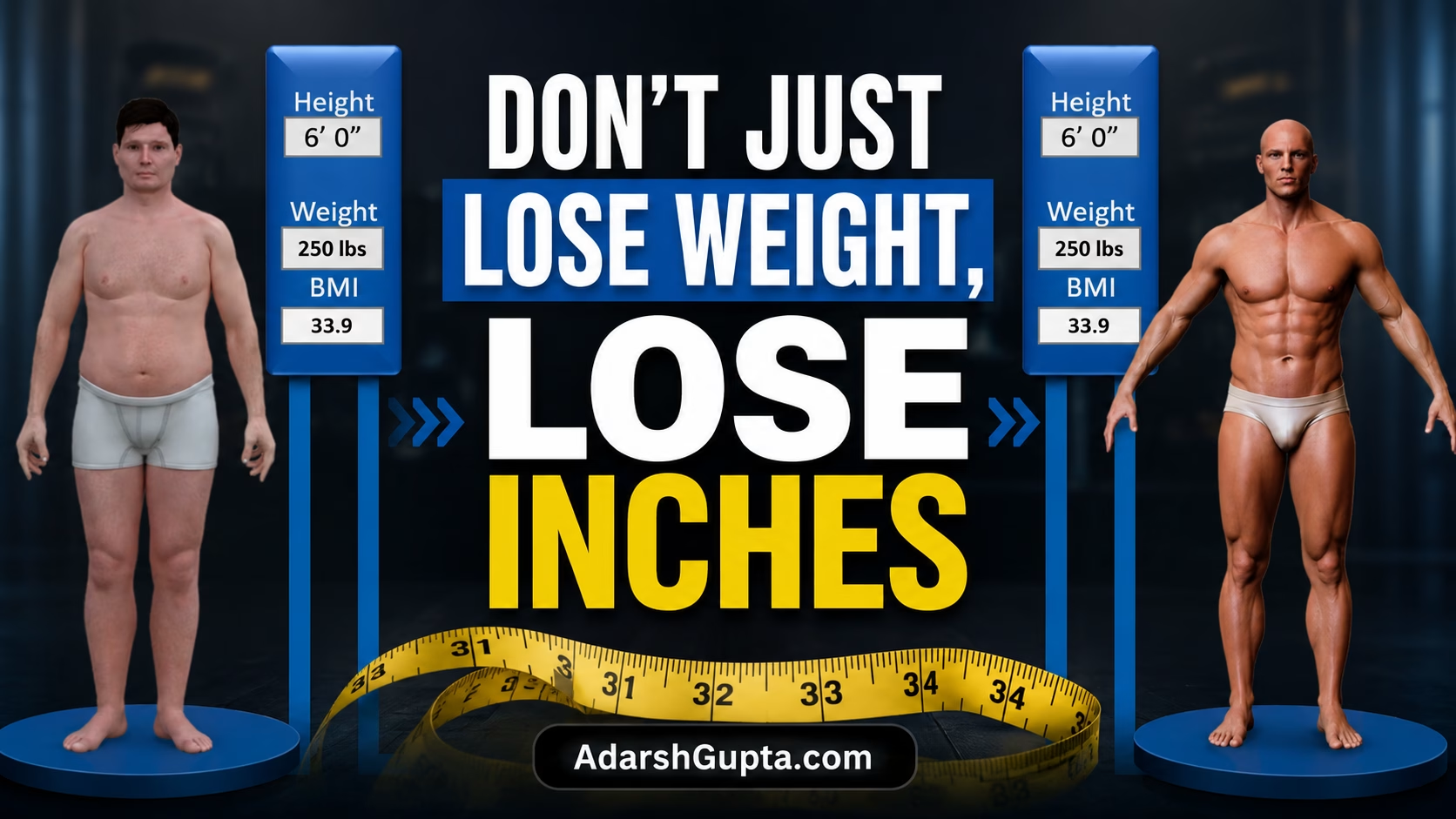
Learning how to lose inches off your waist is a different goal than simply losing weight — and understanding that difference changes everything about how you approach it. Many people trying to change their body focus almost entirely on one number: weight. But weight is a sum of everything inside the body — fat, muscle, water, bone, and the contents of your digestive system at any given moment. Two people can weigh exactly the same, have the same height and BMI, and look completely different — simply because their body composition differs.
This is why “losing inches” is often a more meaningful goal than “losing weight.” Losing inches means reducing body fat — particularly around the waist — while preserving or building the lean muscle that keeps your metabolism running efficiently. The result: a smaller clothing size, a leaner appearance, and measurable improvements in health markers, even if the number on the scale barely moves.
What Body Composition Actually Means
Body composition refers to the proportion of fat versus lean tissue in the body. The three main components are:
- Body Fat Mass (BFM) — the total amount of fat stored in the body, including essential fat (needed for organ function and hormonal health) and storage fat (excess energy stored in adipose tissue).
- Lean Body Mass (LBM) — everything that isn’t fat: muscle, bone, connective tissue, and organs.
- Total Body Water (TBW) — water makes up 50–65% of body weight and fluctuates significantly day to day based on hydration, sodium intake, and hormonal cycles.
When someone “loses weight” rapidly on a crash diet, much of that loss is water and lean muscle — not fat. This is why people can lose 10 pounds and still look essentially the same, while someone who loses 5 pounds of fat and gains 3 pounds of muscle looks dramatically different despite a smaller change on the scale.
Research Note: Studies consistently show that two individuals with identical height, weight, and BMI can have vastly different cardiovascular risk profiles depending on how much of their body weight is fat versus lean mass. This is sometimes called the “normal weight obese” phenomenon — a healthy BMI with excess body fat.
Why Body Fat Percentage Is the Number Worth Tracking
Body fat percentage measures what fraction of your total weight is fat. It’s a more precise indicator of health and body composition than either BMI or total weight alone.
Here are general body fat percentage reference ranges (these vary by age and individual — these are approximate guidelines used in research):
Category
Women (approx.)
Men (approx.)
Essential fat (minimum needed)
10–13%
2–5%
Athletic
14–20%
6–13%
Fitness
21–24%
14–17%
Acceptable
25–31%
18–24%
Obese
32%+
25%+
Why does excess body fat matter beyond appearance? Adipose (fat) tissue is metabolically active — it releases hormones and inflammatory signals that, in excess, are linked to increased blood pressure, elevated blood lipids, blood sugar dysregulation, and cardiovascular risk. Reducing body fat percentage — even modestly — tends to improve these markers even when total weight change is minimal.
Muscle and water, by contrast, support health. Muscle increases resting metabolic rate, provides joint stability, and makes physical activity easier. Protecting and building muscle while losing fat is the core goal of body recomposition — and what makes the difference between losing weight and actually losing inches.
How to Measure Body Fat Percentage at Home
There are several practical options for tracking body fat at home, each with different trade-offs in accuracy and cost:
1. Tape Measure (Simplest — Free)
A soft tape measure is all that’s needed. This is the most accessible method and works well for tracking change over time even if the absolute number isn’t perfectly precise.
You can pick up a soft tape measure on Amazon for under $7.
- For men: Measure the circumference of the neck and abdomen (at the navel). Use an online body fat calculator to convert measurements to a percentage.
- For women: Measure neck, waist (narrowest point), and hips (widest point). Use the same online calculator for an estimate.
Tip: Measure first thing in the morning, before eating, and under the same conditions each time for the most consistent comparison. The trend over weeks matters more than any single reading.
2. Skinfold Calipers (~$20–25)
Calipers measure the thickness of skinfolds (pinched skin and fat) at specific body locations, then use those measurements to estimate overall body fat percentage.
Skinfold calipers are available on Amazon for under $25 and typically come with instructions and measurement charts.
- For men: Chest, thigh, and abdomen skinfold measurements. Use a 3-site skinfold calculator.
- For women: Thigh, triceps, and suprailiac (just above the hip bone) measurements. Same calculator applies.
Accuracy note: Results depend on consistent technique. Having the same person perform measurements each time improves reliability significantly.
3. Bioelectrical Impedance Scale (~$30–50)
Smart scales that use bioelectrical impedance analysis (BIA) send a small, harmless electrical current through the body. Fat conducts electricity differently than water and muscle, allowing the scale to estimate body fat percentage using a built-in algorithm.
BIA scales are available on Amazon starting around $30 and are convenient for daily use since they work like a regular scale.
Accuracy note: Readings can fluctuate based on hydration level, time of day, and recent food or exercise. For best consistency, weigh at the same time each day (first thing in the morning, after using the bathroom, before eating).
4. DEXA Scan (Most Accurate — Requires a Clinic)
Dual-energy X-ray absorptiometry (DEXA) is considered the gold standard for body composition measurement, distinguishing fat, lean mass, and bone density with high precision. Many sports medicine clinics, university wellness centers, and some fitness facilities offer DEXA scans, often for $50–150. This is worth considering as a baseline measurement every 6–12 months if tracking long-term body recomposition.
How to Lose Inches Off Your Waist: The Evidence-Based Approach
Reducing waist circumference and body fat percentage requires a combination of consistent movement, appropriate nutrition, and patience. Here are the strategies with the strongest evidence:
1. Prioritize Strength Training (3x per Week Minimum)
Resistance training is the most powerful tool for body recomposition — losing fat while maintaining or gaining muscle. Muscle tissue burns more calories at rest than fat tissue, so building muscle raises the resting metabolic rate, making fat loss easier to sustain over time.
Research consistently shows that adults who combine strength training with a moderate caloric deficit lose significantly more fat and less lean muscle than those who rely on diet alone or cardio alone. Compound movements — squats, deadlifts, rows, push-ups, lunges — engage the most muscle and produce the greatest metabolic effect. Even bodyweight training at home 3 times per week produces measurable body composition improvements within 8–12 weeks.
2. Add Cardiovascular Exercise for Fat Oxidation
Aerobic exercise — brisk walking, cycling, swimming, dancing — directly burns calories during the activity and supports cardiovascular health. For losing inches specifically, research suggests that moderate-intensity cardio sustained for 30–45 minutes (where conversation is possible but slightly labored) is effective for fat oxidation without excessive muscle breakdown.
Zone 2 training (roughly 60–70% of maximum heart rate) has gained significant research attention for its efficiency at burning fat as a fuel source. A 30-minute daily walk is a sustainable and well-evidenced starting point for most people.
3. Eat Enough Protein at Every Meal
Protein does two important things for losing inches: it preserves lean muscle during a caloric deficit (preventing the “weight loss without body change” problem), and it has a high thermic effect — the body burns 20–30% of protein’s calories just digesting it.
Research on body recomposition suggests a target of 0.7–1.0 grams of protein per pound of body weight per day supports muscle retention while losing fat. Spreading protein across meals (rather than consuming most of it at dinner) tends to optimize muscle protein synthesis. Good sources: eggs, Greek yogurt, cottage cheese, fish, lean poultry, legumes, and protein shakes when whole food sources aren’t practical.
4. Reduce Refined Carbohydrates and Ultra-Processed Foods
Refined carbohydrates (white bread, sugary drinks, packaged snacks) cause rapid blood sugar spikes followed by crashes that drive hunger and overeating. They also trigger higher insulin release, which promotes fat storage — particularly around the abdomen. Replacing refined carbohydrates with high-fiber whole foods (oats, legumes, vegetables, whole grains) stabilizes blood sugar and supports the fat-loss process.
Ultra-processed foods tend to be calorie-dense, nutrient-poor, and engineered to override satiety signals — making portion control difficult. Cooking more meals at home is one of the most consistent predictors of lower body fat across large population studies.
5. Manage Sleep and Stress
Sleep deprivation and chronic stress both elevate cortisol, a hormone that promotes abdominal fat storage and increases appetite — particularly for high-calorie foods. Research shows that people sleeping less than 6 hours per night lose significantly less fat (and more muscle) during a caloric deficit compared to those sleeping 7–9 hours, even when calorie intake is identical.
Building consistent sleep and stress-management habits is often the missing piece for people who are “doing everything right” with diet and exercise but not losing inches. For a structured approach to building these habits, the free Habit Cycle Score Quiz helps identify which part of the habit loop is most likely to derail progress.
6. Track Progress With Measurements, Not Just the Scale
Since building muscle and losing fat can happen simultaneously — especially in people new to strength training — the scale may stay the same or even go up slightly while the body is visibly changing. Taking monthly measurements (waist, hips, chest, upper arms, thighs) alongside body fat percentage gives a far more accurate picture of progress than weight alone.
Many people who feel “stuck” at the same weight are actually making significant body composition improvements that a tape measure would confirm.
What Results to Realistically Expect
Body recomposition is slower than crash dieting but produces lasting, visible changes. Research-based timelines for most adults following a consistent program:
- 2–4 weeks: Improved energy, reduced bloating, early changes in how clothes fit
- 4–8 weeks: Measurable reduction in waist circumference (typically 1–2 inches for consistent effort), early strength gains
- 8–12 weeks: Visible body composition changes, 2–4% reduction in body fat percentage common with consistent training and nutrition
- 6+ months: Significant body recomposition, sustainable metabolic changes, reduced cardiovascular risk markers
The book Don’t Just Lose Weight, Lose Inches by Dr. Adarsh Gupta, DO goes deeper on this approach — with a systematic plan for losing fat and building lean mass using strategies that fit into a real daily routine, including home-based exercise options and practical nutrition guidance.
— Published on AdarshGupta.com | Educational health and habit content by Dr. Adarsh Gupta, DO — Author of The Science of Habits and Don’t Just Lose Weight, Lose Inches
Frequently Asked Questions
Can you lose inches without losing weight?
Yes — and this is actually one of the most common outcomes of a well-designed strength training and nutrition program. When someone loses fat and gains muscle simultaneously (body recomposition), their weight may stay the same or change very little while their waist circumference, clothing size, and body fat percentage all improve measurably. This is especially common in people who are new to strength training or returning after a long break.
How long does it take to lose an inch off your waist?
For most people following a consistent program of strength training 3x per week, moderate cardiovascular activity, and a modest caloric adjustment, losing 1–2 inches off the waist is typically achievable within 6–10 weeks. Results vary based on starting body composition, consistency, sleep quality, and stress levels. Waist reduction tends to accelerate once the habit system is established, as the metabolic benefits of added muscle compound over time.
What is the fastest way to lose inches off your waist?
The approaches with the strongest evidence for reducing waist circumference are: (1) strength training 3+ days per week, (2) reducing ultra-processed foods and refined carbohydrates, (3) eating adequate protein at each meal to preserve muscle, (4) daily moderate-intensity cardio (even a 30-minute walk), and (5) improving sleep quality. No single hack outperforms the combination of these factors consistently applied over 8–12 weeks.
What is a healthy body fat percentage?
Healthy body fat percentage ranges vary by sex and age. For women, the “fitness” range is generally considered 21–24%, with “acceptable” at 25–31%. For men, the fitness range is roughly 14–17%, with acceptable at 18–24%. These are general reference ranges — individual health context matters, and optimal ranges can vary. A healthcare provider or certified fitness professional can help interpret body fat measurements in the context of overall health.
Does strength training help lose inches more than cardio?
For losing inches specifically (reducing body fat while preserving muscle), research consistently favors strength training over cardio alone. Cardio burns more calories during the session, but strength training raises resting metabolic rate for 24–48 hours after exercise and builds muscle tissue that increases baseline calorie burn long-term. The combination of both produces the best outcomes — but if choosing one, strength training tends to produce greater body recomposition results over 12+ weeks.
How do I measure body fat percentage at home?
The three most accessible home methods are: (1) a soft tape measure with an online body fat calculator (free, measures waist/neck/hip circumference), (2) skinfold calipers (~$20) which measure pinched fat at specific body sites, and (3) bioelectrical impedance scales (~$30–50) that estimate body fat when you step on them. For a baseline measurement, many sports medicine clinics and wellness centers also offer DEXA scans (the most accurate method) for $50–150. For tracking progress, consistency of method and conditions matters more than absolute accuracy.
Why am I losing weight but not losing inches?
If weight is dropping but measurements aren’t changing, it typically means the weight loss is coming from water or muscle rather than fat — which is common with very low-calorie diets or excessive cardio without strength training. To shift toward losing fat specifically: increase protein intake to protect lean muscle, add or increase resistance training, and ensure a moderate rather than extreme caloric deficit. Losing fat slowly (0.5–1 lb per week) preserves significantly more muscle than rapid weight loss approaches.