
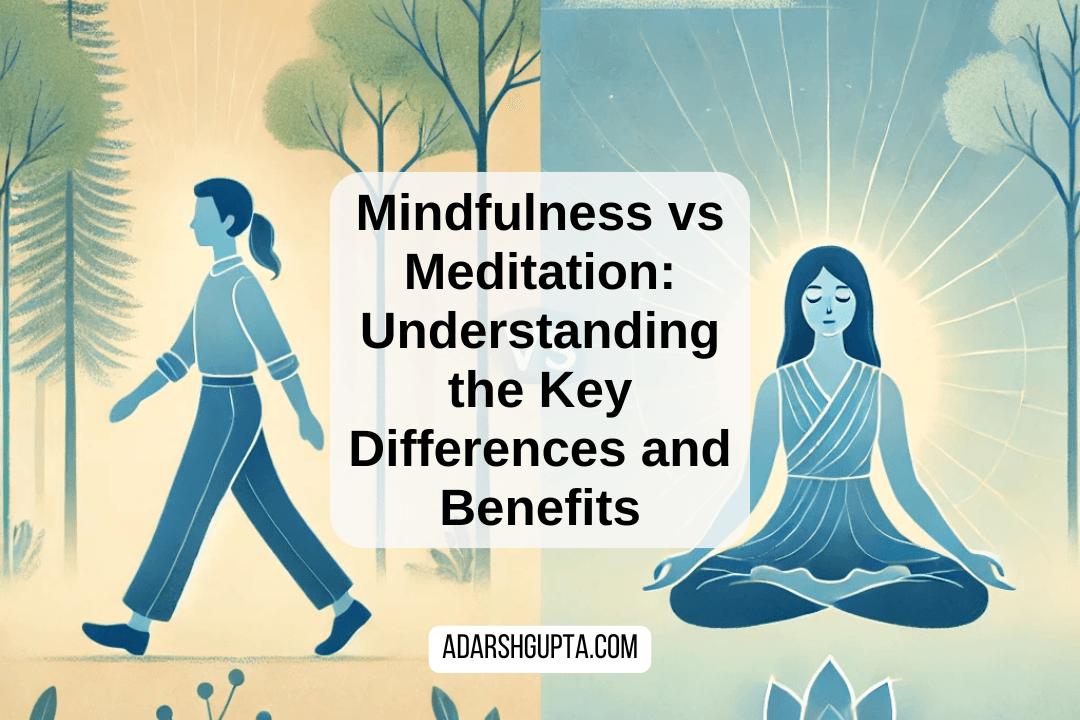
Mindfulness vs meditation – Learn the key differences, benefits, and how to incorporate both into your daily routine for a healthier mind and body.
Mindfulness and meditation are often used interchangeably, but they are not the same. While both practices promote mental clarity, reduce stress, and enhance overall well-being, they differ in approach and application. Understanding the distinction between mindfulness and meditation can help you harness their unique benefits to improve your daily life.
Mindfulness vs Meditation
What is Mindfulness?
Mindfulness is the practice of being fully present in the moment and aware of your thoughts, emotions, and surroundings without judgment. It is a way of engaging with life as it happens, promoting awareness and intentionality in everything you do. Mindfulness does not require a specific time or place—it can be practiced at any moment during daily activities like eating, walking, or working.
Benefits of Mindfulness
- Reduces stress and anxiety by promoting awareness of thoughts and emotions
- Enhances focus and productivity by reducing distractions and increasing concentration
- Improves emotional regulation by fostering a non-judgmental attitude toward experiences
- Strengthens relationships by encouraging active listening and present-moment awareness
- Supports physical health by lowering blood pressure and boosting the immune system
Examples of Mindfulness Practices
- Mindful Breathing: Paying attention to each inhale and exhale
- Body Scan Meditation: Bringing awareness to different parts of the body
- Mindful Eating: Savoring each bite and appreciating food without distractions
- Mindful Walking: Being aware of each step and the sensations of movement
- Gratitude Practice: Taking time to appreciate small moments throughout the day
What is Meditation?
Meditation is a formal practice that involves focusing attention and eliminating distractions to achieve a state of deep relaxation and mental clarity. Unlike mindfulness, which can be practiced at any time, meditation typically requires a dedicated time and place. It often involves sitting in a quiet space with a structured technique to guide the mind into a calm state.
Benefits of Meditation
- Enhances emotional well-being by reducing negative thoughts and increasing feelings of happiness
- Improves cognitive function by strengthening attention, memory, and problem-solving skills
- Promotes relaxation by reducing cortisol levels and decreasing stress
- Encourages self-awareness by allowing deeper exploration of thoughts and emotions
- Supports better sleep by calming the nervous system and reducing insomnia
Types of Meditation
- Mindfulness Meditation: Focusing on the breath or present sensations
- Loving-Kindness Meditation (Metta): Cultivating compassion and positive emotions
- Transcendental Meditation: Repeating a mantra for deep relaxation
- Guided Meditation: Listening to recorded instructions to achieve relaxation
- Zen Meditation (Zazen): Practicing seated meditation with a focus on posture and breath
[
](https://amzn.to/40q8aY2)
[
](https://amzn.to/3DT3W2o)
Key Differences Between Mindfulness vs Meditation
Aspect
Mindfulness
Meditation
Definition
A state of active, open attention to the present moment
A structured practice focused on deep relaxation and awareness
Time & Place
Can be practiced anytime, anywhere
Requires a dedicated time and space
Method
Involves being aware of daily activities
Involves sitting in a quiet place with a focus technique
Goal
To stay present and aware in daily life
To achieve deep relaxation and inner peace
Examples
Mindful eating, walking, working
Guided meditation, transcendental meditation, Zen meditation
How to Incorporate Both Mindfulness and Meditation Into Your Life
While mindfulness and meditation are different, they complement each other. Practicing both can enhance your mental and emotional well-being. Here are some ways to integrate them into your daily routine:
Morning Routine
- Start your day with 5–10 minutes of meditation to clear your mind
- Practice mindful breathing while drinking your morning tea or coffee
During the Day
- Take short, mindful breaks to check in with your emotions
- Practice mindful eating during lunch by savoring each bite
- Use deep breathing techniques to manage stress at work
Evening Routine
- Engage in a guided meditation before bed to promote relaxation
- Reflect on the day with mindfulness journaling
- Practice gratitude mindfulness by listing things you appreciate
Which One Should You Choose?
Choosing between mindfulness and meditation depends on your lifestyle and goals. If you prefer a practice that you can integrate seamlessly into your daily routine, mindfulness might be the best choice. However, meditation may be more beneficial if you seek deeper relaxation and inner exploration.
The good news? You don’t have to choose! Combining both can provide the best of both worlds—mindfulness keeps you present in everyday moments, while meditation helps you develop a deeper sense of awareness and calmness.
Final Thoughts
Mindfulness vs meditation is not about choosing one over the other but rather understanding how they can work together to enhance your mental well-being. Both practices offer profound benefits, from stress reduction and emotional balance to improved focus and better sleep. By incorporating mindfulness and meditation into your daily life, you can cultivate a healthier, more peaceful mind and a happier existence.
Want to explore mindfulness and meditation techniques more deeply? Check out my book, “The 100-Day Happiness Journal“, to start your journey toward a balanced and joyful life.
[

](https://amzn.to/3vkeH9u)
For more insights on holistic living, visit my blog at AdarshGupta.com.