
Procrastination is a common human behavior that affects people from all walks of life. Whether it’s putting off an important work project, delaying household chores, or postponing personal goals, many of us struggle with the tendency to procrastinate. But why do we do it? This article delves into the psychology behind procrastination and explores its root causes.
Understanding Procrastination
Procrastination is more than simply delaying a task. It involves knowingly postponing an important action despite anticipating negative consequences. Research shows that people who procrastinate often experience higher levels of stress and lower well-being (Sirois & Pychyl, 2013)1.
The Psychology Behind Procrastination
Emotional Regulation
Procrastination is often misunderstood as a time management issue, but it’s actually more about managing emotions. It’s a way of avoiding the negative feelings that come with a particular task, such as boredom, anxiety, or self-doubt. When we procrastinate, we momentarily escape from these emotions, but in the long run, it can lead to more stress and anxiety. Understanding the emotional aspects of procrastination can help us develop strategies to overcome it, such as breaking tasks into smaller, manageable components or addressing the underlying emotions directly. (Pychyl et al., 2000)2.
Present Bias
Our brains are naturally inclined to prioritize immediate rewards over future benefits, a phenomenon known as “present bias.” This tendency often leads us to procrastinate on tasks that may offer long-term gains but involve short-term discomfort. For instance, we may put off starting a savings plan or exercising regularly because the rewards are not immediately evident, even though we understand the long-term benefits. Recognizing this cognitive bias is the first step in mitigating its effects and making more informed decisions based on long-term goals rather than immediate gratification.(O’Donoghue & Rabin, 1999) 3.
Perfectionism
The fear of not meeting high standards can be so overwhelming that it can actually prevent people from getting started on tasks. The pressure to perform perfectly can lead to procrastination, as individuals may feel paralyzed by the idea of not meeting their own expectations. This paradoxical situation can create a barrier to progress, causing tasks to be delayed as individuals struggle to overcome their fear of not achieving perfection. It’s important to recognize this pattern and find strategies to overcome it, such as breaking tasks into smaller steps or setting more realistic expectations. (Flett et al., 1992) 4.
Task Aversion
When we find a task unpleasant or boring, it’s natural to procrastinate. The resistance we feel towards the task can make it difficult to muster the motivation to complete it, even if we recognize its importance. Overcoming this aversion often involves finding ways to make the task more engaging or breaking it down into smaller, more manageable parts. By doing so, we can make the task feel less daunting and boost our motivation to tackle it. (Steel, 2007) 5.
Decision Paralysis
When faced with a multitude of options or complex decision-making scenarios, some individuals may experience decision paralysis, which can result in prolonged inaction. This phenomenon occurs when the cognitive load of evaluating various options becomes overwhelming, causing individuals to delay making a choice. Decision paralysis can be particularly challenging in situations where the stakes are high or when the outcomes of different options are unclear. As a result, people may procrastinate in an attempt to alleviate the stress associated with decision-making. Overcoming decision paralysis often involves breaking down the decision into smaller, manageable components and seeking support or guidance to facilitate the process of making a choice. (Anderson, 2003) 6.
[
](https://amzn.to/3yaf7ka)
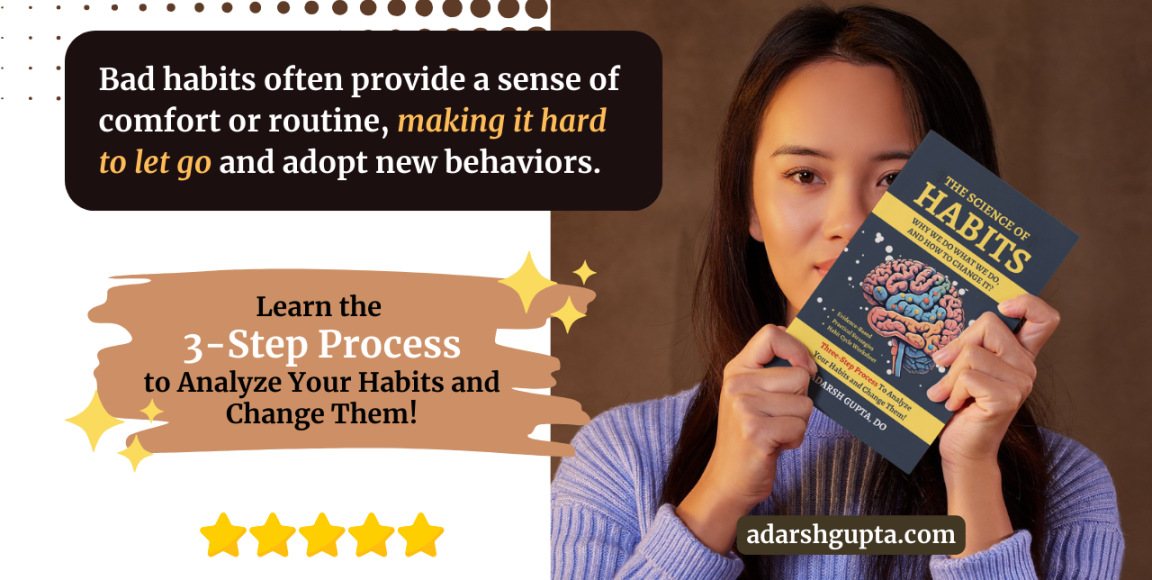
Procrastination is discussed in detail as a habit in this book. Read the book to learn the three-step process for overcoming bad habits and building good habits.
Overcoming Procrastination
Understanding why we procrastinate is the first step towards overcoming this habit. Here are some strategies that research has shown to be effective:
Implement the Pomodoro Technique
The Pomodoro Technique is a time management method developed by Francesco Cirillo in the late 1980s. It’s a simple yet effective way to improve productivity and focus by breaking your workday into 25-minute intervals (called “Pomodoros”) separated by short breaks.
Using a Pomodoro Planner can be incredibly helpful in implementing this technique into your daily routine.
Download our Pomodoro Daily Planner Worksheet for Free!
#wpforms-50381 { }
Please enable JavaScript in your browser to complete this form.
Please enable JavaScript in your browser to complete this form.
Name *
First
Last
Email Name
Email *
Type your email
( function() { const style = document.createElement( 'style' ); style.appendChild( document.createTextNode( '#wpforms-50381-field_2-container { position: absolute !important; overflow: hidden !important; display: inline !important; height: 1px !important; width: 1px !important; z-index: -1000 !important; padding: 0 !important; } #wpforms-50381-field_2-container input { visibility: hidden; } #wpforms-conversational-form-page #wpforms-50381-field_2-container label { counter-increment: none; }' ) ); document.head.appendChild( style ); document.currentScript?.remove(); } )();
Download
Type in the email address and click “download” to get Download Link.
Practice Mindfulness
By practicing mindfulness meditation, individuals can develop a deeper awareness of their thoughts and emotions, leading to enhanced self-regulation and a decrease in procrastination.
Use Implementation Intentions
Creating specific “if-then” plans involves setting clear intentions about when and where you will complete specific tasks. For example, “If it is 3 p.m. on Friday, then I will work on the sales report in my office.” This strategy has been proven to increase goal achievement by providing a concrete plan of action and reducing the likelihood of procrastination. It helps eliminate uncertainty and prompts us to take the necessary steps toward completing our goals. (Gollwitzer & Sheeran, 2006).
Employ Temptation Bundling
Pairing a task you’re likely to procrastinate on with something you enjoy can help increase your motivation and make the task more appealing. For example, if you dread doing household chores, you can play your favorite music or listen to an interesting podcast while you work. This way, you can turn an otherwise dull task into a more enjoyable experience. Similarly, if you have to work on a tedious project, you can set small milestones for yourself and reward each achievement with a small treat or break doing something you like. This technique can help make daunting tasks feel less overwhelming and more manageable. (Milkman et al., 2014).
Visualize Future Self
By envisioning the positive impact that completing the task will have on your future self, you can create a powerful motivation for taking action in the present. This mental exercise can help to bridge the gap between your current efforts and the desired future results. When you visualize the benefits and rewards that await you, it becomes easier to stay focused and committed to the task at hand. Embracing this mindset can provide a meaningful sense of purpose and direction as you work towards achieving your long-term goals. (Hershfield et al., 2011).
Practice Cognitive Restructuring
When we’re faced with daunting tasks, it’s easy for negative thoughts to creep in and amplify our anxiety. However, by using cognitive behavioral therapy techniques, we can challenge and reframe these negative thoughts to alleviate our task-related anxiety. This approach involves replacing destructive thought patterns with more constructive and balanced perspectives, ultimately empowering us to tackle tasks with greater confidence and ease. (Rozental et al., 2015).
Use the “Five-Second Rule”
When you need to start a task, it can be easy to get caught up in overthinking and indecision. One simple technique that I find helpful is counting backward from five. This technique interrupts the cycle of overthinking and prompts action. By the time I reach one, I find myself more ready and motivated to begin the task at hand. It’s a small but effective way to overcome that initial resistance and get things moving (Robbins, 2017).
Create Accountability
Sharing your goals with others can create a sense of external accountability, which in turn can increase your motivation to follow through. When you share your goals with someone else, you feel a sense of responsibility to keep your word and make progress. Additionally, using commitment devices, such as setting up automatic reminders or creating public commitments, can also help reinforce your motivation and encourage you to stay on track. These accountability measures can make a significant difference in your ability to achieve your goals and maintain your momentum toward success. (Ariely & Wertenbroch, 2002).
Improve Your Environment
When setting up your workspace to minimize distractions, it’s important to consider several factors. First, choose a quiet area where you can work without being disturbed. Keep your workspace organized and free of clutter to create a calm and focused environment. Additionally, consider using noise-cancelling headphones or background music to block out any external noise. Having a comfortable chair and proper lighting is also crucial for creating an ideal work environment. Natural light is preferred, but if that’s not available, invest in good-quality lighting that reduces eye strain. Furthermore, consider using tools and apps that can help you stay focused and productive, such as time management apps, website blockers, or task management software. Finally, it’s important to establish boundaries with others to respect your workspace and work hours, minimizing interruptions and distractions.
Practice Self-Compassion
When we’re kind to ourselves, even in moments of procrastination, we’re practicing self-compassion. This means understanding that everyone procrastinates from time to time and that it’s okay. By being gentle with ourselves, we can reduce the negative emotions that often lead to procrastination in the first place. Instead of harsh self-criticism, we can offer ourselves understanding and support, making it easier to move past procrastination and focus on the tasks at hand.
These strategies can be particularly effective when tailored to your personal procrastination triggers and work style. It’s often helpful to experiment with different approaches to find what works best for you.
Conclusion
Procrastination is a complex behavior rooted in our emotional and cognitive processes. By understanding why we procrastinate, we can develop more effective strategies to overcome this tendency and increase our productivity and well-being.
Remember, overcoming procrastination is a process. If you find yourself struggling to stop procrastinating, don’t be too hard on yourself. Recognize the underlying causes, apply the strategies mentioned, and be patient with your progress.
References:
- Sirois, F., & Pychyl, T. (2013). Procrastination and the priority of short‐term mood regulation: Consequences for future self. Social and Personality Psychology Compass, 7(2), 115–127. https://doi.org/10.1111/spc3.12011 ↩︎
- Pychyl, T. A., Lee, J. M., Thibodeau, R., & Blunt, A. (2000). Five days of emotion: An experience sampling study of undergraduate student procrastination. Journal of Social Behavior & Personality, 15(5), 239–254 ↩︎
- O’Donoghue, Ted, and Matthew Rabin. 1999. “Doing It Now or Later.” American Economic Review, 89 (1): 103–124.DOI: 10.1257/aer.89.1.103 ↩︎
- Flett, G. L., Blankstein, K. R., Hewitt, P. L., & Koledin, S. (1992). Components of perfectionism and procrastination in college students. Social Behavior and Personality: An International Journal, 20(2), 85–94. https://doi.org/10.2224/sbp.1992.20.2.85 ↩︎
- Steel P. The nature of procrastination: a meta-analytic and theoretical review of quintessential self-regulatory failure. Psychol Bull. 2007 Jan;133(1):65-94. doi: 10.1037/0033-2909.133.1.65. PMID: 17201571. ↩︎
- Anderson CJ. The psychology of doing nothing: forms of decision avoidance result from reason and emotion. Psychol Bull. 2003 Jan;129(1):139-67. doi: 10.1037/0033-2909.129.1.139. PMID: 12555797. ↩︎