

Many find themselves asking, “Why can’t I stay consistent?” Consistency is often hailed as the cornerstone of success, whether in health, work, or personal growth. You might know exactly what needs to be done, but somehow, putting it into practice day after day feels impossible. This article explores the science behind consistency, common obstacles, and practical strategies to help you build lasting change.
Why can’t I stay consistent? Why Consistency Is So Hard
At its core, consistency requires repeated action over time. But human behavior is complex and influenced by many factors beyond just knowledge or motivation.
The Role of Motivation and Willpower
Many people rely on motivation or willpower to stay consistent. However, motivation fluctuates naturally, and willpower is a limited resource. According to research, willpower can be depleted by stress, decision fatigue, and emotional strain. This is why relying solely on willpower often leads to burnout and inconsistency. For a deeper dive, see Why Willpower Fails: Structured Systems for Success.
Understanding the Science of Behavior Change
Behavior change can be understood through a four-stage process:
- Trigger: A cue or prompt that initiates the behavior.
- Craving: The desire or motivation to perform the behavior.
- Action: The behavior itself.
- Reward: The positive outcome that reinforces the behavior.
When one of these stages is weak or missing, consistency suffers. For example, if the trigger is unclear or the reward is not satisfying, it’s harder to repeat the action. Learn more about this process in The Science of Habits.
Common Reasons You Can’t Stay Consistent
1. Lack of Clear Triggers
Without clear triggers, it’s easy to forget or delay the desired behavior. For example, if you want to exercise but don’t have a specific time or cue, it’s easy to skip workouts. Setting up environmental cues, like placing workout clothes where you can see them, can help.
2. Unrealistic Expectations
Setting goals that are too ambitious can lead to frustration and burnout. If you try to overhaul your entire lifestyle overnight, it’s harder to maintain consistency. Instead, focus on small, manageable changes. This approach is supported by research on sustainable behavior change.
3. Insufficient Rewards
Rewards reinforce behavior. If the reward isn’t meaningful or immediate, motivation wanes. For example, exercising for long-term health benefits might not feel rewarding enough day-to-day. Adding small, immediate rewards can boost consistency.
4. Lack of Structured Systems
Systems make consistency easier by reducing reliance on willpower. For example, planning meals ahead of time or scheduling workouts can automate healthy behaviors. Structured systems reduce decision fatigue and increase follow-through. For practical tips, see 5 Simple Habits That Can Transform Your Health.
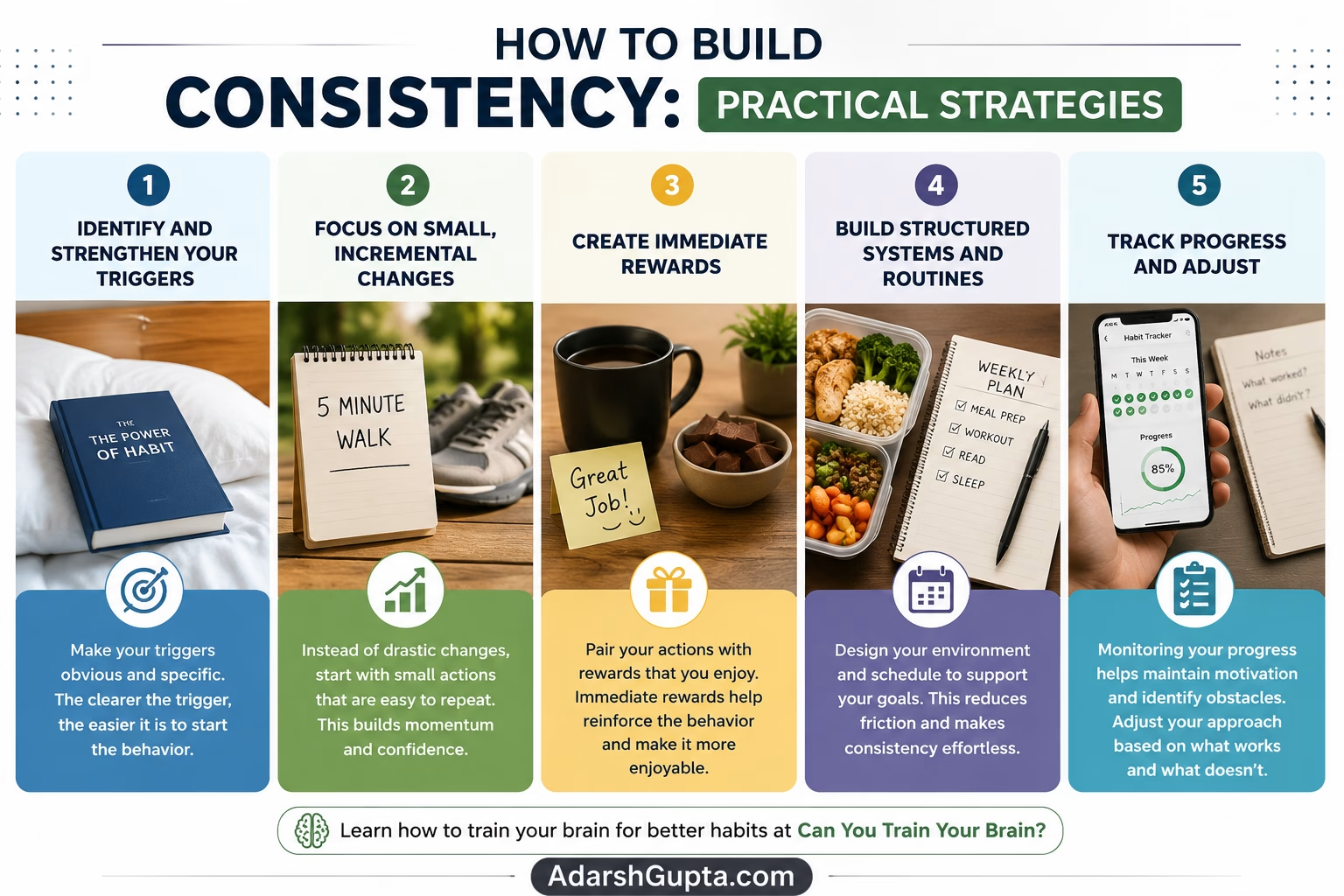
How to Build Consistency: Practical Strategies
1. Identify and Strengthen Your Triggers
Make your triggers obvious and specific. For example, if you want to read more, place your book on your pillow as a reminder before bed. The clearer the trigger, the easier it is to start the behavior.
2. Focus on Small, Incremental Changes
Instead of drastic changes, start with small actions that are easy to repeat. For example, walk for five minutes daily instead of aiming for an hour-long run. This builds momentum and confidence.
3. Create Immediate Rewards
Pair your actions with rewards that you enjoy. This could be a small treat, a moment of relaxation, or tracking progress visually. Immediate rewards help reinforce the behavior and make it more enjoyable.
4. Build Structured Systems and Routines
Design your environment and schedule to support your goals. For example, meal prepping reduces daily decisions about food, making healthy eating more consistent. Learn how to train your brain for better habits at Can You Train Your Brain?
5. Track Progress and Adjust
Monitoring your progress helps maintain motivation and identify obstacles. Use journals, apps, or simple checklists to keep track. Adjust your approach based on what works and what doesn’t.
Additional Factors Influencing Consistency
Emotional and Psychological Barriers
Stress, anxiety, and self-doubt can undermine consistency. Addressing mental health and building resilience are crucial. For example, mindfulness practices can help manage stress and improve focus.
Physical Health and Energy Levels
Fatigue and poor health reduce the ability to stay consistent. Prioritizing sleep, nutrition, and recovery supports sustained effort. Learn more about why we eat and how it affects energy at Why Do We Eat?
Frequently Asked Questions (FAQ)
Q1: Is consistency more important than intensity?
Yes. Consistency builds sustainable progress, while intensity without consistency often leads to burnout. Focusing on small, regular actions is usually more effective.
Q2: How long does it take to build a new consistent behavior?
Research suggests it can take anywhere from 18 to 254 days, depending on the behavior and individual differences. Patience and persistence are key.
Q3: Can I rely on motivation to stay consistent?
Motivation fluctuates and is unreliable alone. Building structured systems and clear triggers is more effective for long-term consistency.
Q4: What if I fail to stay consistent sometimes?
Occasional lapses are normal. The important part is to get back on track without self-judgment. Consistency is about overall patterns, not perfection.
Key Takeaways
- Consistency requires more than knowledge; it depends on clear triggers, manageable cravings, actionable steps, and meaningful rewards.
- Willpower alone is insufficient; structured systems and routines support lasting behavior change.
- Small, incremental changes are more sustainable than drastic overhauls.
- Tracking progress and adjusting strategies help maintain motivation and overcome obstacles.
- Emotional and physical health significantly impact your ability to stay consistent.
Understanding why you can’t stay consistent is the first step toward building habits that stick. By applying science-backed strategies and creating supportive systems, you can bridge the gap between knowing what to do and actually doing it.
For more insights on habit science and behavior change, visit The Science of Habits and explore related articles on Why Focusing on Inches Lost Is More Important Than Weight.
External references to deepen your understanding include resources from the American Psychological Association and National Institutes of Health.