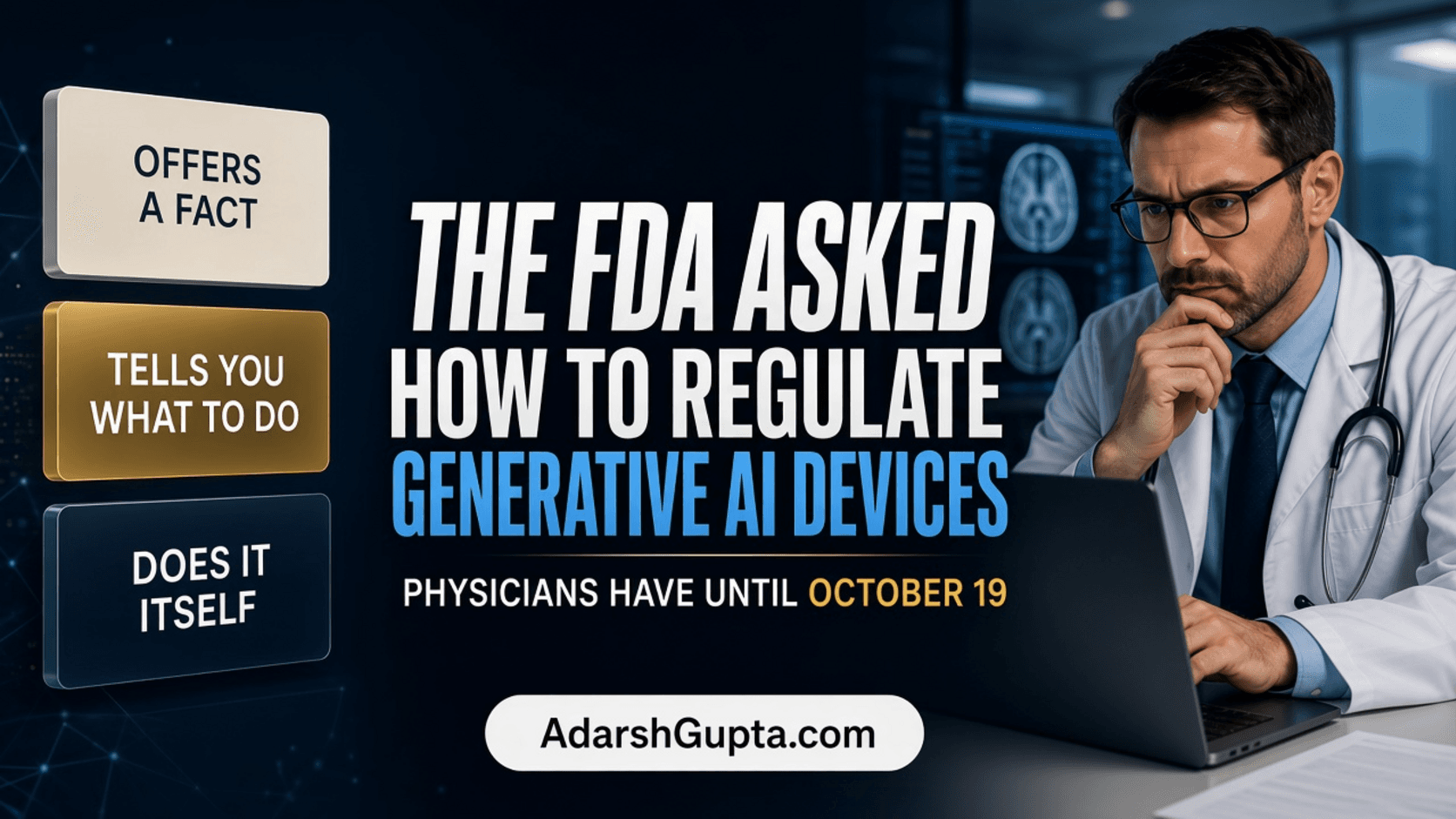


The FDA Asked How to Regulate Generative AI Devices. Physicians Have Until October 19.
FDA's August 2026 discussion paper asks how to regulate generative AI medical devices. Comments close October 19. Here is what physicians should weigh in on.
Clinical AI
Evidence · Practice · What Actually Works

About this work
After 25 years in medicine, I learned that the gap between a good idea and a good outcome is almost always about evidence — how you evaluate it, how you translate it, and how you apply it when a decision is on the line.
My work spans clinical medicine, behavioral science, research, teaching, curriculum development, and artificial intelligence — because meaningful progress in healthcare requires people who can move fluidly across all of those domains, not just optimize within one.
I've chaired an IRB. I've edited for Cochrane. I've treated 5,000+ patients. That background doesn't make me skeptical of AI — it makes me specific about what it needs to get right.
This is where I think out loud about clinical AI: what works, what the evidence actually says, and what physicians need to understand before these tools run their workflows.
CertaintyGrade is the evidence-rating tool. It scores certainty for a specific clinical question, using the GRADE standard, rather than treating every cited paper as equally trustworthy.
Writing

FDA's August 2026 discussion paper asks how to regulate generative AI medical devices. Comments close October 19. Here is what physicians should weigh in on.

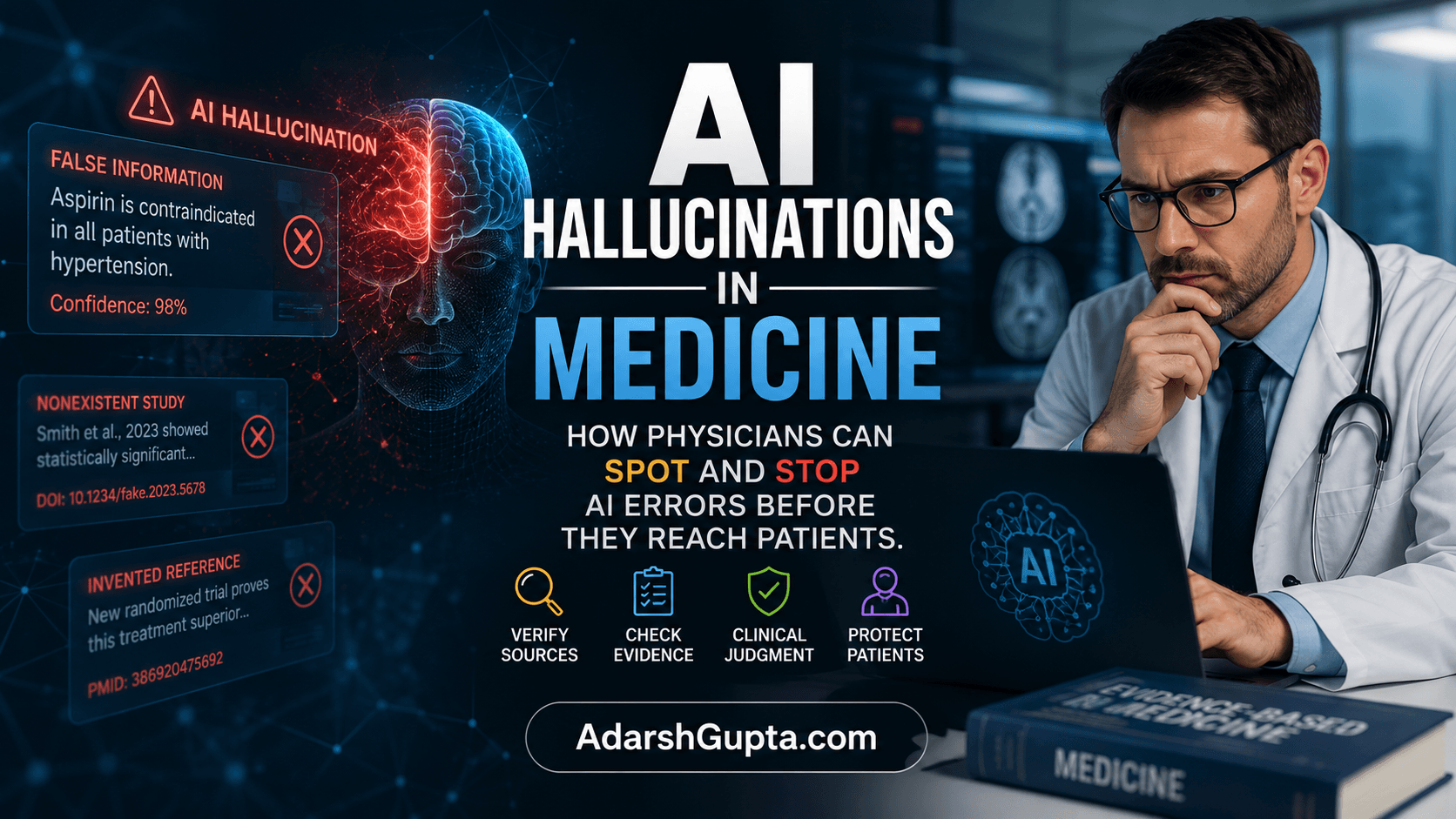
AI tools are entering clinical practice faster than physicians can evaluate them. Here's a practical framework for spotting AI hallucinations before they harm patients - from a physician with 25+ years in practice.

Artificial intelligence (AI) has been making headlines across industries for the past few years. Healthcare is no exception, as AI has the potential to revoluti